
Meditation, Topics

Healing PTSD Through Meditation: A Path to Peace and Recovery

Post-traumatic stress disorder (PTSD) can leave deep emotional scars, making it difficult to find peace and move forward. While therapy and medication are often essential components of PTSD treatment, meditation can be a powerful complementary tool for healing and recovery.

Understanding PTSD and the Role of Meditation

PTSD is triggered by a traumatic event and can lead to a range of symptoms, including flashbacks, nightmares, anxiety, hypervigilance, and emotional numbness. These symptoms often stem from the body’s stress response becoming dysregulated, leading to a heightened state of arousal even when there is no immediate danger.

Meditation, particularly mindfulness-based practices, can help to soothe the nervous system and restore a sense of calm. By focusing on the present moment and cultivating awareness of thoughts and sensations without judgment, meditation can:

  • Reduce Anxiety and Stress: Meditation helps to activate the parasympathetic nervous system, responsible for rest and relaxation, counteracting the hyperarousal associated with PTSD.
  • Manage Flashbacks and Nightmares: Mindfulness practices can create a sense of distance from distressing memories and thoughts, making them less overwhelming.
  • Improve Emotional Regulation: By increasing awareness of emotions as they arise, meditation can help individuals develop healthier coping mechanisms and reduce impulsive reactions.
  • Enhance Self-Compassion: Cultivating self-compassion through meditation can counteract feelings of self-blame and shame often associated with trauma.

Types of Meditation for PTSD

Several types of meditation have shown promise for PTSD:

  • Mindfulness Meditation: Focusing on the breath or bodily sensations, observing thoughts and emotions without judgment.
  • Loving-Kindness Meditation: Cultivating feelings of compassion and kindness towards oneself and others.
  • Body Scan Meditation: Bringing awareness to different parts of the body, noticing any sensations without judgment.
  • Guided Meditation: Following guided instructions for relaxation and visualization.

Tips for Starting a Meditation Practice

  • Start Small: Begin with short sessions (5-10 minutes) and gradually increase the duration as you become more comfortable.
  • Be Patient: Meditation takes practice. Don’t get discouraged if you find it difficult at first.
  • Find a Quiet Space: Choose a peaceful environment where you won’t be disturbed.
  • Focus on Your Breath: Use your breath as an anchor for your attention.
  • Observe Thoughts and Sensations: Notice any thoughts, emotions, or bodily sensations that arise, but don’t get caught up in them. Let them come and go.
  • Seek Guidance: Consider joining a meditation class or working with a therapist trained in mindfulness-based practices.

Important Considerations

  • Meditation is Not a Replacement for Therapy: While meditation can be a valuable tool, it’s essential to seek professional help for PTSD. Therapy can provide a safe space to process trauma and develop personalized coping strategies.
  • Start Slowly: If you’re new to meditation, begin with short sessions and gradually increase the duration as you become more comfortable.
  • Be Kind to Yourself: Meditation is a journey. Be patient with yourself and celebrate small victories along the way.

Remember: Healing from PTSD takes time and effort. Meditation can be a powerful ally in your recovery, helping you to find peace, resilience, and a renewed sense of well-being.

Meditation, Thoughts, Topics

Bloom from within: Meditation and Yoga

Bloom From Within: How Meditation and Yoga Can Cultivate Hope on Your Healing Journey

Life can be a rollercoaster, filled with exhilarating highs and moments that leave us feeling lost and unmoored. When we’re struggling with mental health challenges, that feeling of being lost can intensify. But here’s the beautiful truth: within each of us lies a wellspring of resilience and hope. Practices like meditation and yoga can be powerful tools to tap into that inner strength and cultivate a sense of peace on your healing journey.

Meditation: A Path to Inner Calm

Think of your mind as a busy marketplace. Thoughts flit around like chattering vendors, anxieties loom large, and negativity can cast a long shadow. Meditation helps us step back from this marketplace and become the observer. By focusing on the present moment, often through breathwork, we begin to quiet the mental chatter and cultivate a sense of inner calm.

This calm isn’t about achieving a blank slate – it’s about creating space. In that space, we can observe our thoughts and emotions without judgment. We can acknowledge them, and then gently let them go. This practice doesn’t erase challenges, but it equips us to face them with greater clarity and a sense of inner peace.

Yoga: The Mind-Body Connection

Yoga is more than just fancy pretzel poses (although those can be fun!). It’s a holistic practice that connects the mind, body, and breath. As we move through yoga postures, we become more aware of our bodies, releasing tension and cultivating strength. This physical movement has a powerful impact on our mental state. Studies have shown that yoga can reduce stress, anxiety, and symptoms of depression.

But yoga’s benefits go beyond the physical. The practice of focusing on our breath during yoga postures creates a bridge between the mind and body. This connection fosters a sense of mindfulness, allowing us to be present in the moment and appreciate the simple beauty of being alive.

Hope Blooms with Each Practice

The journey toward mental well-being is rarely linear. There will be setbacks and moments of doubt. But with each meditation session, each yoga flow, we cultivate a seed of hope within. We learn to navigate challenges with greater resilience, find moments of joy amidst the storm, and connect with our inner strength.

These practices aren’t about achieving some unrealistic state of zen. They’re about progress, not perfection. It’s about showing up for ourselves, even when it feels hard. And with each effort, we nurture that seed of hope, watching it blossom into a powerful force that guides us on our healing journey.

So, take a deep breath, unroll your yoga mat, and begin. You have the strength to bloom, and these practices can be the sunlight that helps you flourish. Remember, even the smallest step forward is a step towards a brighter, more hopeful tomorrow.

Meditation, Topics

Mental Health & Yoga

Unroll Your Mat, Unwind Your Mind: How Yoga Can Be Your Mental Health Superpower (Deep Dive)

Feeling like your brain’s a pressure cooker ready to burst? We all know the struggle. But what if there was a way to manage stress, boost your mood, and improve sleep, all without fancy equipment or expensive memberships? Enter yoga, the ancient practice that’s anything but outdated.

Sure, the pretzel poses (think downward-facing dog or warrior II) are iconic, but yoga is so much more. It’s a multifaceted approach to well-being that combines:

  • Physical postures (asanas): These aren’t just about flexibility. Holding poses strengthens muscles, improves balance, and increases blood flow, which can leave you feeling energized and invigorated.
  • Breathing exercises (pranayama): Yoga emphasizes deep, controlled breathing techniques that activate the parasympathetic nervous system, your body’s “rest and digest” response. This counteracts the stress response (fight-or-flight) and promotes relaxation.
  • Meditation: Many yoga practices incorporate meditation techniques that help quiet the mind and cultivate a sense of inner peace. This can be as simple as focusing on your breath for a few minutes.

Science on the Yoga Mat:

Research is increasingly backing up what yogis have known for centuries: yoga offers a potent blend of physical and mental health benefits. Studies have shown that yoga can:

  • Reduce stress hormones: Cortisol, the stress hormone, can wreak havoc on your mood and sleep. Yoga helps lower cortisol levels, leaving you feeling calmer and more centered.
  • Boost mood-regulating brain chemicals: Exercise, in general, is a mood booster, and yoga is no exception. It triggers the release of endorphins, our body’s natural feel-good chemicals, leading to a more positive outlook.
  • Improve sleep quality: Yoga’s relaxation techniques and focus on deep breathing can significantly improve sleep quality. This is especially helpful for those struggling with insomnia or restless sleep.
  • Combat anxiety and depression: Studies suggest that yoga can be a valuable tool in managing symptoms of anxiety and depression. It can help regulate emotional responses and promote feelings of well-being.

Finding Your Perfect Yoga Flow:

The beauty of yoga is its inclusivity. There’s a style for everyone, from the gentle and restorative Yin yoga to the more vigorous Vinyasa flow. Here’s a quick breakdown to help you find your fit:

  • For beginners: Hatha yoga is a great starting point. It focuses on basic postures and proper alignment, making it perfect for learning the fundamentals.
  • For stress relief: Yin yoga is all about holding gentle poses for longer periods, allowing you to deeply relax and unwind.
  • For energy boost: Vinyasa yoga links postures together in a flowing sequence, getting your heart rate up and leaving you feeling energized.
  • For flexibility: Iyengar yoga emphasizes proper alignment with the use of props like blocks and straps, helping you improve your flexibility safely and effectively.

Your Yoga Journey Starts Now:

Ready to embark on your yoga adventure? Here are some tips to get you started:

  • Find a class: Many gyms and studios offer yoga classes. Look for a beginner-friendly class or one that caters to your specific needs.
  • Explore online resources: There are tons of free yoga instructional videos online, catering to all levels and styles.
  • Invest in a yoga mat: This provides a comfortable and grippy surface for your practice.
  • Listen to your body: Don’t push yourself into pain. Yoga is about self-discovery and respecting your limitations.
  • Most importantly, have fun! Yoga is a journey, not a destination. Embrace the process, celebrate your progress, and enjoy the amazing benefits it has to offer.

So, unroll your mat, take a deep breath, and get ready to experience the transformative power of yoga. Your mind and body will thank you for it!

Meditation

Yoga and Self Discovery

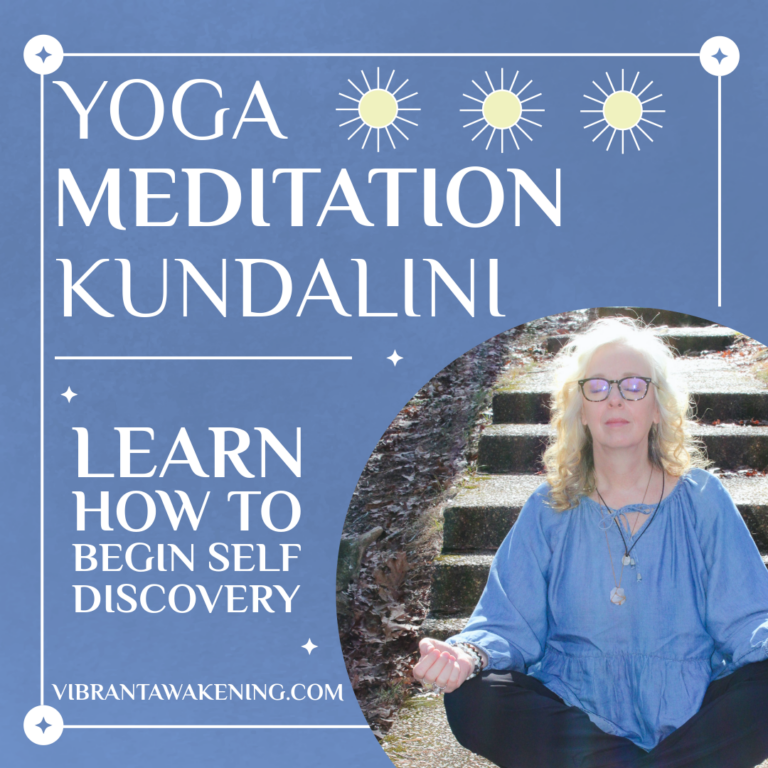
Yoga is more than poses as we are taught today.  It has been around for thousands of years and has always been based around self discovery and meditation to simply put it.

What caught my attention with the Yogamu Institute was their teachings based on the origins of Yoga.  I never realized Yoga has a far greater depth to it.  A deeper dive into who we are at a base level.  We are not humans having a spiritual experience.  We are spiritual beings having a human experience.  This has led me down a path of self discovery.  

Self discovery is an essential part to healing.  You cannot look outside yourself for healing.  After years upon years of therapy getting me nowhere and medication that left me zombie-like, I finally realized those were never going to get me to the point of true happiness.  I was hearing the same cookie-cutter therapy methods over and over again.  Granted, in the beginning, they helped me to a point, but I was still miserable beyond words.

One day, it came to me that I had to face all the things I felt were making me miserable and sick.  I knew down deep it was possible for me.  I knew there was more to my life than just getting by.  After a couple of years of diving hard into personal development.  Into waking up every morning and listening to motivational speakers, I had this spark in me that kept nudging me to try meditation.

I said the same thing as most others say, I can’t meditate because my mind won’t shut up.  Sound familiar?  My mind would go 100 miles an hour jumping from one thought to another.  I still fought it anyway.  So, looking back, I believe the Universe tried a different route.  I was nudged to take out my Tarot cards I bought while in high school and never really touched.  Using these cards led me to tapping into my intuition more and more until I finally said, OK, OK!  I’ll try meditation!

I did not think about Yoga as an option due to the issues I was having with my back.  At the time, I believed Yoga was what people do in a studio for exercise.  After months of trying meditations I found on YouTube, I was presented with  a Yogamu Institute ad on Facebook.  I ended up signing up for their course bundle for Yoga, Meditation, and Kundalini.  I had tried an online class of Kundalini and I was completely intimidated by it.  But it was part of the bundle so why not.

As I was reading through the material for the meditation class, I was discovering a whole world hidden behind the yoga classes I knew.  There is so much more to yoga than what we see.  The origins of it are meditation based.  Focused on self discovery.  Getting to the roots of who you are and how to view the world around you.  I am learning so much about myself that have been hidden deep in my subconscious that has held me stagnant for so long in my journey.  The doors have been opening and I view the world on a whole new level.  My depression and anxiety are gone.  Don’t get me wrong, I still have my days.  But they are learning opportunities.  I ask questions rather than sitting like a blob of self pity.  I see that I am put in positions that are not comfortable, and sometimes outright hate, because it will lead me to discovering more about myself and how to handle the perceived ups and downs in life.

Meditation brings you to a peaceful place in the moment.  I have learned that anxiety and depression is based upon worries of the past and the future.  When you meditate and get your mind in the present moment, you begin to heal.  Bringing yourself into your heart space, calms your mind and you feel love for yourself.  When you are in that space, your thoughts stop racing.  Your anxiety ceases.  You will get to a point where you love your meditation time and miss it when you don’t.

Yoga, meditation, and kundalini are about discovering you.  It helps you let go of your past.  View the world around you in a whole new, peaceful and exciting way.  I have a newfound love for kundalini yoga and all it does for me.  So much so that most of my focus is progressing in my studies of it.  It brings me so much vitality and opens me up further for possibilities. 

I also want to explain that yoga, meditation, and kundalini are not based on any religion.  It is for everyone of any religion around the world.  I decided to take classes with Yogamu because it is based in India.  The birthplace of Yoga.  Sankrit is used in mantras (prayers), but again, not attached to religion.  It is an ancient language.  Said to be the oldest on the planet.  It isn’t so much a language as it is a vibration connecting you to the earth and the Universe.  Universe can be who you call God, Buddha, and so on.  I say Universe to cover it all.  I felt this was important to note as it was part of my questions in beginning my studies.

I am blessed to have all of these in my life now.  I want to take what I learn to be a service to others on their journeys.  I know what it feels like to live in a world of desperation and hopelessness.  I am here to tell you, there is a way out.  There is a world out there for you bigger than you could imagine for yourself.  It just takes a spark in you to begin and I am happy to help you in that journey.

Be sure to sign up for my newsletter, join me on Facebook, YouTube and Tiktok for live meditations, Reiki sessions, Tarot mentorship, and yoga.  I am here to help you get started on the life and experiences you are meant to have and find peace.
Meditation

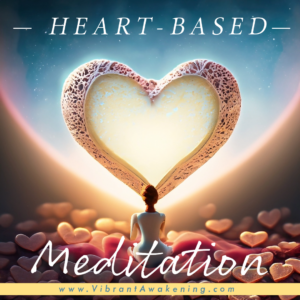
Heart-Based Meditation

What will a heart-based meditation do for you?  It will bring you out of the chaos of your thoughts swirling in your mind.  Concentrating on your heart as a bright white light will center you away from those thoughts and bring you into the now.  Where there is peace and love. 

When you are truly in your heart-space.  Seeing your heart as this bright, warming light, you will naturally feel a smile.  Tell your heart thank you, I love you my heart.  Sometimes this will cause the reaction of tears streaming down your face.  I know it did for me.  It still does from time to time.  Not because I am sad, but because I feel so much love and peace.  They are tears of joy and happiness.  Something I had longed for my entire life.  And it was always there for me to tap into.  I just did not know how.

Taking a step every morning to show your heart love – you will begin to transform your life into something you never thought possible.  I used to think this was all crazy talk.  I am here now to tell you, it is not.  I am a testament to this being possible for you.

The following meditation will get you into your heart-space.  You will feel so much love for yourself.  The quiet will feel blissful.  As with anything you start, it will take practice.  Do this with zero judgement.  There is no right or wrong.  This is your journey. Your beautiful journey.    Take a few moments every day and do this meditation.