I am very excited about 2024! Things are starting to unfold and more opportunities are coming forth for me. At the moment I am in slow motion, but slow is still forward and I am OK with that.
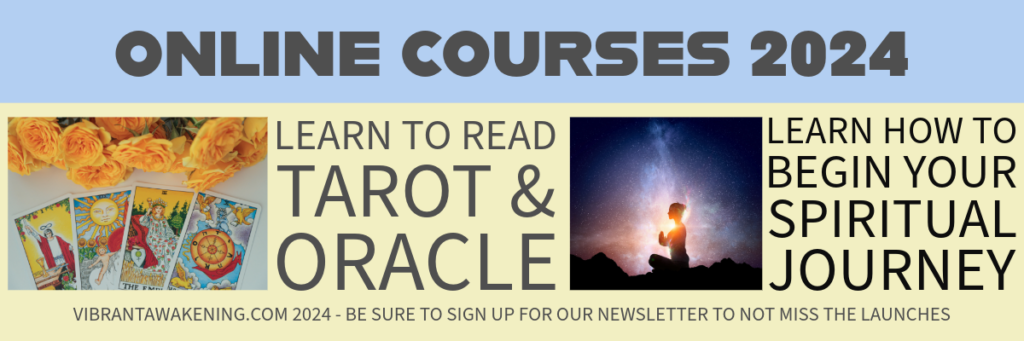
I have begun working on a great course that teaches you how to intuitively read tarot and oracle cards! Yes, I will explain everything from the beginning of tarot, how to tap into your intuition, understand the cards with a much simpler method, and much more! Be sure to sign up for my newsletter to not miss its opening!
I will then work on a course that helps you begin your own spiritual journey. I remember in the beginning I was so confused by all the information out there and had no clue how to start, what to do, is this right, is this wrong, etc. It will make clear the misconceptions in today’s society and how to navigate it all with confidence. I am very excited to get working on it later this year!
 Since the beginning of this year, I have added a few more courses to my repertoire. I am very excited about this and they will help with my ultimate goal of being of service to others. I will be beginning a course called Trauma-Informed Yoga. The title gives a good idea about its purpose. My heart has always been about helping others recover from traumas throughout their lives. I have been down the road of therapy, inpatients, outpatients, day treatment, etc etc etc. Although those kept me going and gave me some tools to put in my tool chest to help me through tough times, I never felt it gave me hope to recover from the traumas. I didn’t and don’t want to go through life always on guard with my next trigger. I would not believe that this was just my life and I had to deal with it. I have rewired the majority of my thought processes. I have a couple of stragglers there but slowly they are on the way out. I am human and this is all a process of change. I am blessed to have recovered from all the diagnoses I received and collected over the years. I desire to help others do the same. So between this new upcoming certification course and Yoga Therapy, I will have a strong foundation.
Another course I am currently taking, because we cannot forget about our furry friends, is the Ayurevic Consultant for Animals certification. This couple with Animal Reiki Healing, I can help our furry friends lead a happy and healthy life.
Since my last post, I have completed my Kundalini Yoga Teacher 200 HR certification. I am very excited about it because I have found a love for it Kundalini. So much so that I am continuing my education of 500 HRs. My goal for this is to offer online classes on TikTok and YouTube Live. I will also be sharing meditations for healing.
I became a Reiki 2 Practitioner 2 years ago and the universe has been nudging me to continue my studies. So, of course, I listen to my guides and nudges and currently working on Reiki Master/Teacher. I do not have any plans to teach Reiki in the near future. But years down the road that is a possibility in order to keep it going.
Be sure to join my newsletter to keep up to date. Because of all my classes, I do not have time to bombard your email box with loads of emails so don’t worry about that! I only send out at this time updates that are important to know.
Thank you and Namaste